

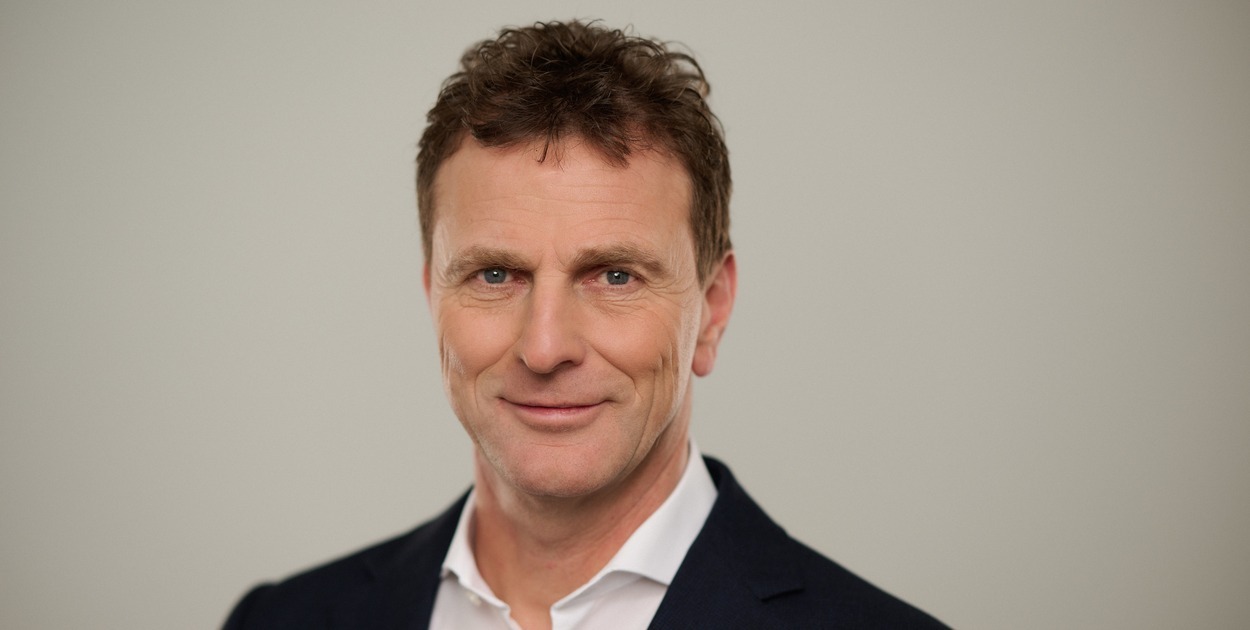
If clients choose people who are like them, the same logic applies to mergers between independent fund managers. Here, Patrick Héritier examines the real obstacles to consolidation, the lessons to be learnt from the Probus-Pleion merger, and the conditions that will enable the platforms of the future to emerge.
How do you explain why consolidation is still taking so long to materialise amongst independent fund managers?
In reality, things always take longer than one imagines. There are a great many contingencies. When we talk about ‘independent asset managers’, we must never overlook the term ‘independent’. When you merge, you effectively give up all or part of that independence. Many independent asset managers are entrepreneurs. They have built their firms around the relationships of trust they have cultivated over time with their clients. It is not just a question of valuation or synergies. It is also a question of identity, culture and governance. They are naturally attached to their independence and wish to retain their freedom of action.
There is also a more human dimension, linked to egos, corporate cultures and the way decisions are made. We recently had a case in Luxembourg. Everything seemed perfectly aligned: the skills matched, the synergies seemed obvious, and the discussions appeared to be going very well. But when I explained to our counterparts that strategic decisions were taken collectively by the partners, with each one having a right of veto, that brought the discussions to an end. It just goes to show that consolidation remains, above all, a human affair.
How is it, for example, that the members of the Alliance, in ten years, have not yet managed to bring about certain mergers amongst themselves?
The Alliance was set up to discuss common issues, not to serve as an M&A platform for its members. The average size of its members is now approaching three billion francs. At this level, most of these organisations already have an executive committee, an investment office, compliance and risk management functions, as well as favourable pricing terms with their partner banks.
In practice, their executives see themselves more as potential consolidators than as candidates for a merger. This does not mean that discussions are not taking place, but, to date, the need is less pressing than for smaller organisations.
I also believe that the work carried out by the Alliance tends to create a more favourable environment for this consolidation trend.
What steps should be taken today to facilitate this consolidation trend?
I am not in favour of forced consolidation. Things must happen naturally. Regulation is already driving certain organisations to evolve. Client needs also play a part. But as long as a company creates value and meets its clients’ expectations, I do not see why the process should be artificially accelerated.
Above all, we must not introduce new layers of regulation to force this consolidation. The constraints are already significant enough at the moment, whether for fund managers or for banks.
Sticking to the driving forces, from a technical perspective, I see three: governance, operational capacity and the flexibility of business models. On governance, many mergers fail because key issues are not clarified early enough. As for operational capacity, I remain convinced that a successful merger must offer more than simply the sum of assets under management. It must also result in a better operational platform, better risk management, better technology and a better customer experience. As for the flexibility of business models, it is best to start from the premise that a merger does not necessarily have to take the form of a full merger from the outset.
Probus Pleion has invested heavily in its technological infrastructure and in the in-house development of its PMS. What strategic advantages do you derive from this?
When operating a complex model, as is the case with Probus Pleion, digitalisation and standardisation become essential. We have therefore chosen to develop our own PMS and our own CRM. This means we have tools that are perfectly tailored to our needs and those of our fund managers.
Above all, we are not dependent on any external suppliers. As soon as a need arises, development work begins immediately, with property managers liaising directly with the teams based at our offices. This close collaboration is a real competitive advantage.
Furthermore, the infrastructure we have put in place is fully scalable. When a new team or a new manager joins us, everything is already in place. This is a tremendous catalyst for growth. Our platform also played a key role in the integration of Probus, and subsequently in the expansion of our operations in Dubai.
Looking back, what are the main lessons to be learnt from the merger between Probus and Pleion?
For us, one plus one didn’t equal two but three. Each of us was able to contribute skills that the other lacked. Pleion, for example, had its own platform and IT tools, an LPCC licence and a proven track record of growth. For its part, Probus had developed a much more structured investment office and possessed certain specific skills that we lacked.
This complementarity is also evident amongst the partners. We have different backgrounds; we’re aware of this and we use this diversity as a strength. When issues become complex, the three of us sit down together to discuss them.
The merger then gave us a stronger financial footing. It now enables us to take on more ambitious projects, particularly in Luxembourg and Dubai.
What are your strategic priorities today?
Our priority is not to acquire companies, but to initiate and develop projects with people who share our vision. We believe that prioritising this approach is more sustainable than adhering to a purely financial mindset.
In Switzerland, the aim is to strengthen our geographical presence. In Luxembourg, we are aiming to reach a critical mass. In Dubai, we intend to capitalise on the dynamism of the Emirates. In Mauritius, we see significant potential amongst institutional clients and pension funds.
I like the image of planets. A small planet exerts a weak gravitational pull; a large planet attracts more talent and offers a clearer vision, but beyond a certain threshold, the mass ends up crushing individuals. The challenge is to find the right size.
Where do you see the main area of growth today?
We see strong potential in the ultra-high-net-worth-individuals segment. Many of these clients express needs comparable to those of a family office, without necessarily needing to consider setting up a dedicated structure. We are able to provide them with a consolidated overview, technological tools, multi-jurisdictional support and our investment expertise. Looking specifically at Switzerland, we continue to see excellent opportunities in the areas of pension provision and services for institutional clients.
What do you now expect from custodian banks?
We expect custodian banks to be genuine partners to us, with a good understanding of our business, responsiveness and a relationship based on trust. Compliance cannot be viewed in isolation; it is a shared responsibility. The checks carried out by the banks also provide an additional layer of security. They should enable us to identify any anomalies or inconsistencies that we might have overlooked.
There is also significant room for improvement in terms of digitalisation. Account openings, electronic signatures and certain KYC processes could be much more standardised. I must admit that I sometimes find it hard to understand why the industry is not making faster progress on these issues, given that they would benefit all its stakeholders.
Ultimately, we choose banks based on clients’ specific needs. Not all banks have the same expertise or the same understanding of the various markets.
If you were to design the independent asset manager of the future, what would be the three essential characteristics?
The first is institutional strength. Independence must not be confused with fragility. Clear governance, professional risk management and investment capacity have become essential.
The second aspect is technological. Clients expect greater transparency, speed and a consolidated view of their wealth. We must be able to provide them with these tools.
Finally, human qualities will remain crucial. In our line of work, clients often choose people who are similar to themselves. Hence the importance of having diverse teams capable of supporting families through the different stages of their lives.