

Consolidation among independent asset managers is gathering pace in Switzerland. Following the takeover of Stanhope Capital, Corient has completed the acquisition of the Geneva-based multi-family office Bedrock, thereby confirming the growing interest of major international platforms in the Swiss EAM market. At Corient, Kurt MacAlpine and Daniel Pinto foresee the emergence of a new generation of asset managers in the long term: more structured, with a more global focus and a more institutional set-up.
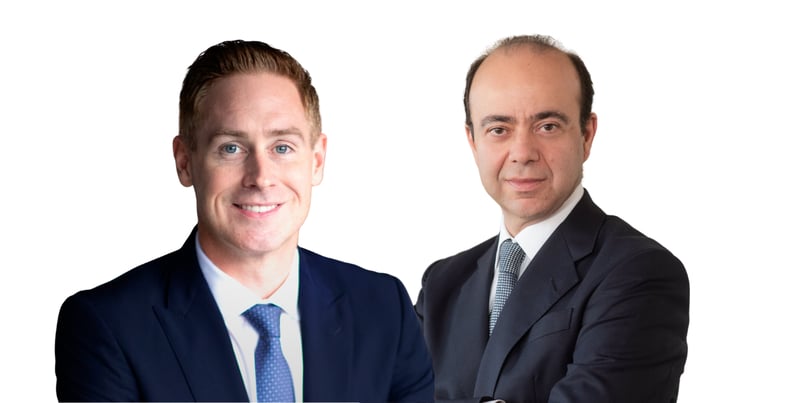 What makes the Swiss EAM market so attractive for platforms like yours?
Kurt MacAlpine.
Switzerland remains one of the world's major centres for wealth management. For Corient, the attractiveness of this market is based on the sophistication of the client base, the entrepreneurial quality of the players in place and the fact that the EAM segment is still highly fragmented. Our ambition is to build a global partnership focused on independent asset management and dedicated to ultra-high-net-worth clients. Switzerland is central to this strategy because of its international positioning and historical expertise.
One aspect of wealth management that is often misunderstood is the very notion of a "global" model. Many institutions operate in several jurisdictions, but very few are really organised to serve their clients seamlessly across borders. At Corient, we wanted to build a model that was more along the lines of an integrated, advisory-type partnership than a traditional banking structure. This means organising the business around the customer and not around local silos.
When a family decides to move or consolidate assets from one jurisdiction to another, traditional organisations often create internal friction because the teams remain remunerated locally. We built Corient with a different philosophy. As part of an integrated partnership, the teams work together globally around the client. This approach is particularly relevant for UHNW families, whose assets, structures and lifestyles have become profoundly internationalised.
Daniel Pinto.
The Swiss market is currently highly polarised. On the one hand, the big private banks have considerable human and financial resources, but their operating models are not always aligned with the interests and expectations of UHNW clients. On the other, there are hundreds of independent asset managers and multi-family offices that offer a conflict-free approach, but generally lack the resources to invest globally across asset classes or offer broader family office capabilities.
This is precisely where we see a significant opportunity, as we are able to bring clients the best of both worlds.
What are the main market needs that you are seeking to address through this acquisition strategy?
Daniel Pinto.
Today's large families are looking for services that combine independence with institutional capabilities. They also increasingly expect their advisers to go beyond simple portfolio management to offer broader services that extend to wealth planning, structuring, family governance, inheritance and philanthropy.
This development is inevitably transforming the traditional role of EAMs, which now require broader infrastructures, more advanced technologies and global capabilities.
There is now a growing gap between the level of sophistication of clients' expectations and the resources actually available within independent structures. We believe we are uniquely positioned to bridge this gap.
Kurt MacAlpine.
Wealth is becoming both more international and more complex. Families now operate in multiple jurisdictions and are looking for globally coordinated advice. Our aim is to combine institutional-level investment capabilities with a partnership model designed to support clients globally, without internal conflicts.
This involves an investment platform that covers all asset classes, both public and private, and the ability to support families with broader structuring, governance and family office issues. We believe that the future of wealth management, targeted at the UHNWI, lies precisely in this combination of investment expertise and holistic advice.
How do you see the Swiss EAM market developing over the next few years?
Kurt MacAlpine.
Consolidation is inevitable. Rising client expectations, tighter regulation and succession issues are accelerating this trend. Independent asset managers increasingly need critical mass to access technology, private markets, family office capabilities and more global investment resources.
At the same time, the economics of the industry are changing rapidly. Today's clients expect services comparable to those of large institutions, with consolidated reporting, access to private markets and highly personalised advice. This raises the bar considerably for smaller structures.
Daniel Pinto.
We believe that Switzerland will gradually see the emergence of very large EAM platforms operating on the scale of private banks - without actually being banks. The number of players will probably decrease, but the remaining structures will be significantly larger and more international.
The boundaries between private banks, EAM and multi-family offices are becoming increasingly blurred as clients seek a more global and integrated approach. The winners will be the players capable of building models that encourage fluid collaboration between business lines, services and jurisdictions, for the benefit of the customer.
How do you explain the failure so far of the major independent asset managers to come together?
Daniel Pinto.
The challenge is not the acquisition itself, but the integration. Many deals fail because the structures remain fragmented after the transaction, both culturally and operationally. At Corient, integration begins immediately after the deal is signed. The aim is to operate under a single partnership, a single culture and a single platform. This is much more difficult than you might think. Bringing wealth management entrepreneurs together requires alignment not only strategically, but also culturally, organisationally and philosophically. Corient has solid experience in this area.
Kurt MacAlpine.
Corient is not simply a network of independent managers sharing the same infrastructure. It's a true partnership in which the clients belong to the firm and not to individuals. This alignment is essential if we want to consolidate in a sustainable way. A lot of platforms are based on a financial engineering rationale that focuses on the short term. In contrast, we are trying to build something that will last, which profoundly changes the nature of the discussion, both with the founders and with the customers.
What is Corient's current strategy in Europe, and more specifically in Switzerland?
Kurt MacAlpine.
Europe is of major strategic importance, because Ultra High's assets are becoming increasingly international. It's clear that the acquisitions of Stanhope and Bedrock have considerably strengthened our presence in Switzerland and, more broadly, in Europe.
Daniel Pinto.
Switzerland is central to our European strategy. Bedrock is an important step, but certainly not the last. We are continuing to analyse other opportunities with structures that share our entrepreneurial culture and our UHNW focus.
In this respect, what type of structure are you targeting today?
Kurt MacAlpine.
We remain extremely selective. We are looking for structures that already serve an ultra-high-net-worth clientele, with a culture that is compatible with our partnership model. The aim is not simply to acquire assets, but to bring together entrepreneurs who want to continue to build and develop their business within a broader organisation. We are particularly interested in companies with strong client relationships, international exposure and a genuine advisory culture.
Daniel Pinto.
For us, it's not a question of chasing size. The structures that integrate best are generally those that are already operating with a multi-family office approach. They understand that wealth management is no longer just about managing portfolios, but about supporting families in a more holistic way. We are also keen to integrate structures whose founders do not feel that they are 'leaving' their business, but rather that they are embracing a broader entrepreneurial vision and pursuing their development with us.
What kind of platform are you trying to build?
Kurt MacAlpine.
We are trying to create a new category of wealth management player. Not a private bank, not a traditional consolidator, not just a multi-family office, but a global partnership based on its investment expertise, its family office capabilities and its ability to provide independent advice without conflicts of interest. Today, our investment platform is already operating with institutional capabilities covering both public and private markets, while retaining the entrepreneurial culture of an independent structure.
Daniel Pinto.
The entrepreneurial dimension is essential. The founders who join Corient remain partners and shareholders in the Group. That's a major difference. In most transactions in the sector, it's really a question of an exit. Here, the entrepreneurs continue to build their business within the partnership.
This model is particularly relevant in Switzerland, where many EAMs have spent their lives developing their companies without wishing to retire immediately. They still want to grow, develop their customer relationships and remain involved in the company's strategic trajectory.
What are your long-term objectives?
Daniel Pinto.
When entrepreneurs join Corient, the story doesn't end with the transaction. It begins at that point.
Kurt MacAlpine.
We believe that the industry is evolving towards a smaller number of independent global platforms, but much more powerful ones. Our ambition is for Corient to become one of the key players in this transformation.