

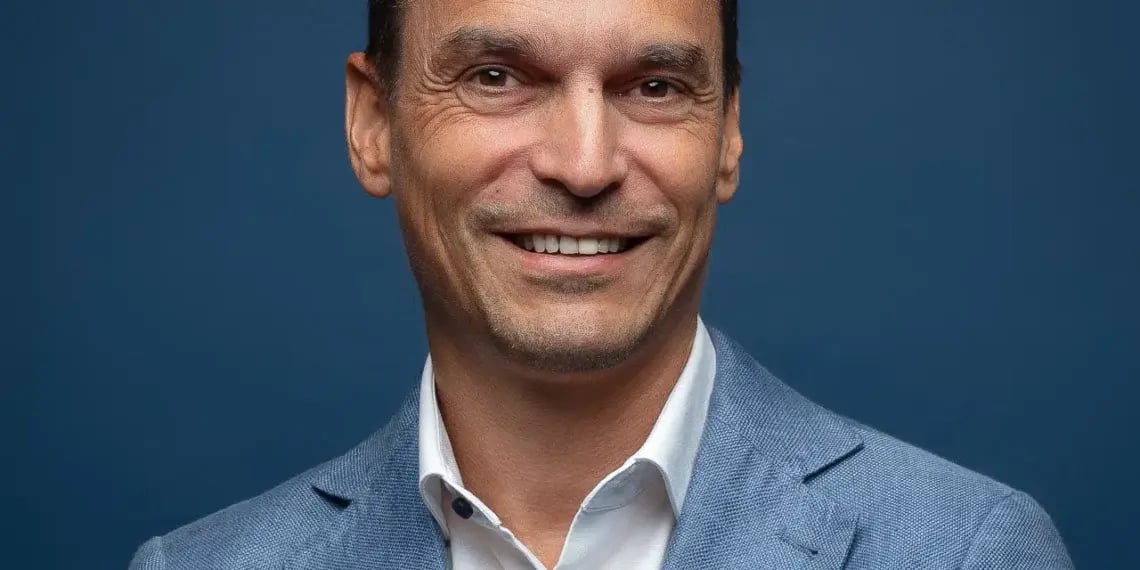
The banking sector is evolving at a rapid pace, driven by digitalisation, regulation and changing customer expectations. With the creation of its Observatory, the ISFB aims to analyse these changes more effectively and anticipate the sector’s future needs. Its director, Mathias Baitan, discusses the objectives of this initiative and the 2025 review of an institute that is intelligently expanding its remit.
The ISFB Observatory on Banking and Financial Skills, which you set up, has now become operational. What are its objectives?
The main objective is to gain a better understanding of how banking roles are evolving in order to anticipate the skills the sector will need in the future. The financial sector is evolving rapidly, driven by regulation, digitalisation, demographic changes and shifting customer expectations. In this context, it is essential to have a mechanism capable of analysing these developments in a structured and independent manner.
The ISFB Observatory aims precisely to document these transformations and to provide financial institutions with analytical insights that will enable them to shape their training, recruitment and skills development strategies.
What are the Observatory’s priorities?
The first priority is to initiate a discussion within the financial centre on the evolution of skills. The changes taking place in the sector are very real, and it is important for us to recognise this collectively in order to anticipate the necessary adjustments.
As the leading institute for banking and financial skills in French-speaking Switzerland, we have a role to play as a catalyst. We must therefore engage in dialogue not only with our members, but also with our partners and the authorities, so that we can reflect together on future developments.
In the longer term, the aim is to gain a better understanding of how the sector’s key functions are changing. Which skills are emerging? Which ones are evolving? And which ones might gradually disappear? It is this work of observation and foresight that will enable us to prepare effectively for the changes currently underway.
Eight founding banks are also behind this project. What do you think this initiative reveals about the sector’s current concerns?
This mobilisation shows that the issue of skills has become strategic for the sector as a whole. Banks are facing rapid transformations in their business lines. They must simultaneously incorporate new regulatory requirements, develop technological skills and continue to offer high-quality advice to their customers.
The fact that several institutions have chosen to support the creation of this ISFB Observatory reflects a shared desire to better anticipate these developments and to respond to them collectively. We are aware, however, that the capacity for anticipation or foresight varies depending on the size of organisations. One of the Observatory’s objectives is precisely to share these analyses with the entire French-speaking Swiss financial centre, so that all stakeholders can benefit from them, regardless of their own capacity to mobilise resources on these issues.
In practical terms, what types of analyses or tools will you be making available to financial institutions in French-speaking Switzerland?
The Observatory will produce several types of reports.
On the one hand, regular analyses of trends in roles and skills within the financial sector. The aim is to better document the transformations currently underway and to identify the areas in which skills requirements are changing most rapidly. To this end, we are collaborating with the Faculty of Psychology and Educational Sciences at the University of Geneva, as well as with the Faculty of Economic and Social Sciences at the University of Fribourg.
Secondly, we aim to make our framework of roles and skills more accessible in order to contribute to a better understanding of the sector’s professions and how they are evolving.
We have also initiated a collaboration with the Nomads Foundation to explore potential synergies between different industries. As part of this, we wish to draw inspiration from a foresight methodology developed by Nomads in collaboration with the University of Geneva and various stakeholders in French-speaking Switzerland, which aims to better identify the skills and professions of the future.
The aim is to combine these different approaches in order to provide the French-speaking Swiss financial centre with useful analyses to anticipate future changes.
You have just published the ISFB’s 2025 Annual Report. How would you summarise the progress made by the Institute over the past year?
The Institute is doing well. 2025 was a year of consolidation and development for the ISFB. We have continued to strengthen our training programmes and developed new courses in key areas for the financial centre, particularly in artificial intelligence, data management and risk management. We have also stepped up our collaboration with institutions in the financial centre.
The creation of the Banking and Financial Skills Observatory marks an important milestone, as it broadens the Institute’s role beyond training. In this context, we have notably strengthened our research capabilities with the arrival of Christelle Zagato.
Furthermore, our career development division has really taken off with the arrival of its head, Evelyne Rechemann. This division now supports our member institutions through assessment services, skills reviews and recruitment support.
What are the key figures to note from this annual report?
Above all, our annual report highlights the scale of the services provided by the Institute in support of the financial centre. The ISFB is a non-profit association recognised as being of public benefit, whose mission is to strengthen collective and individual expertise within the banking and financial sector in French-speaking Switzerland, thereby enhancing both the competitiveness of institutions and the employability of their staff.
Among the key trends, since 2022 we have observed a steady increase in the number of professionals certified through the ISFB’s programmes, as well as a gradual strengthening of the visibility of our collective brand, which is now a recognised benchmark for skills within the sector in French-speaking Switzerland.
The appendix to the annual report, which sets out the detailed financial results, will be distributed to members at our Annual General Meeting. I can, however, already confirm that the financial results for 2025 are excellent and fully in line with our expectations.
You are increasingly referring to the ISFB as a platform for skills and careers, going beyond continuing professional development. How does this development redefine the Institute’s role within the financial centre?
Indeed, the traditional model of professional associations must evolve to meet the needs and expectations of the times. The ISFB is no exception. Since early 2023, we have been undertaking a far-reaching transformation of the Institute in order to broaden its mission and better support our members in addressing the challenges of institutional competitiveness and professional employability.
The ISFB is no longer merely a centre for continuing professional development. It has become a genuine centre of expertise and career development for the French-speaking Swiss financial sector. We aim both to establish a benchmark for skills amongst professionals in the sector and to offer employers a forum for discussion and reflection on the evolution of professions.
With this in mind, we have adopted a more holistic view of career paths. A career is not merely a succession of training courses. It forms part of a continuum comprising various stages, some positive, others more complex: entering the labour market, phases of professional development, periods of transition, challenging times, and even preparing for retirement.
Continuing professional development obviously remains a key driver of progression and employability along this journey. However, it stands alongside other equally important aspects, such as access to professional networks, observing industry practices, and developing the ability to adapt to changes in the profession.