

Pictet’s assets under management or custody passed CHF 800 billion in 2026, entirely through organic growth. The Group remains committed to a model built for the long term. In this interview, Sven Holstenson explains the Group’s strategic priorities through to 2030, namely accelerating in private assets, expanding in Asia, advancing its technological transformation and further strengthening its value proposition. He also shares his take on the forces reshaping wealth and asset management, from the rise of artificial intelligence to the increasing sophistication of family offices and the growing prominence of independent asset managers.
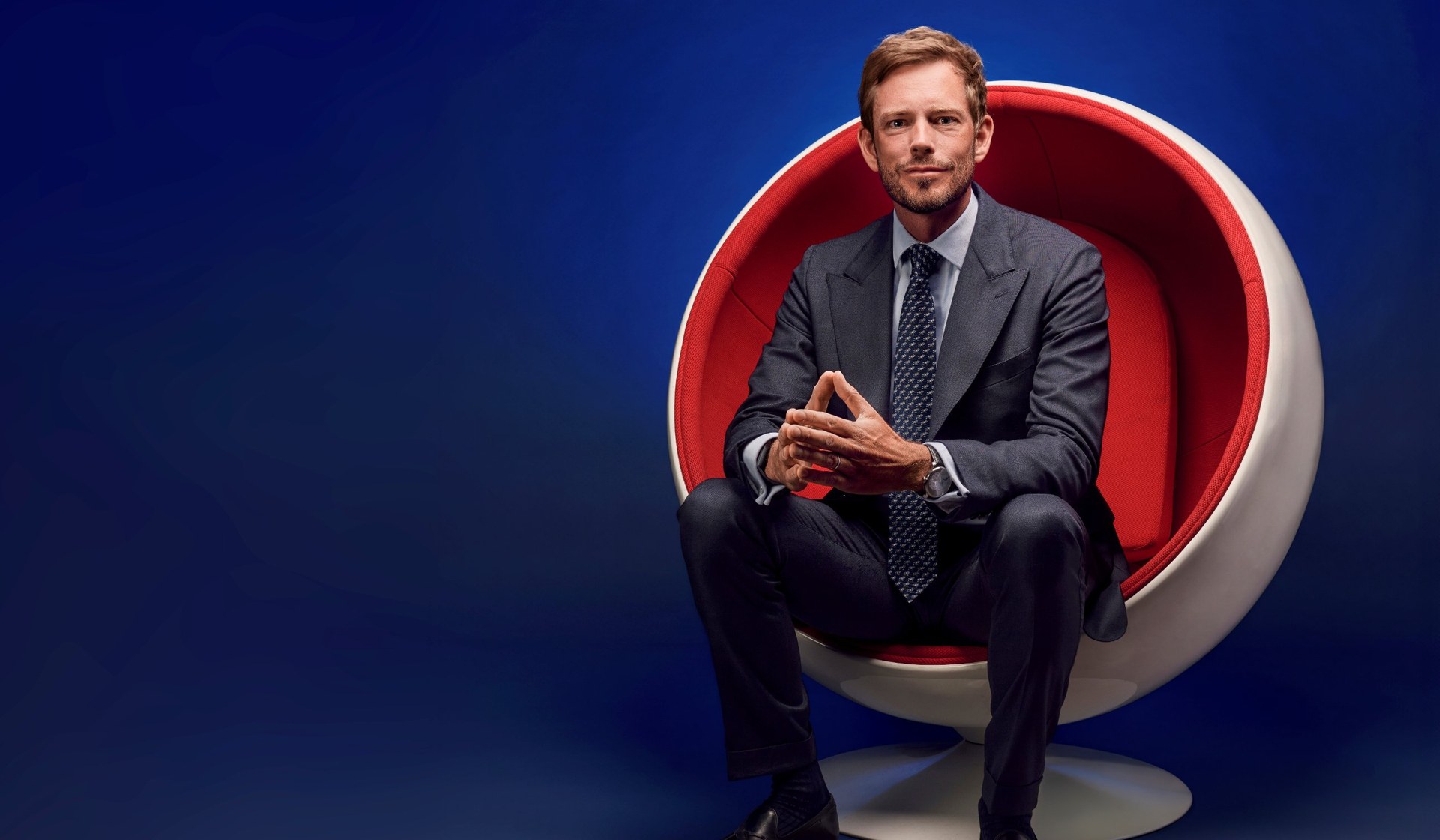
Pictet’s assets under management have increased from CHF 437 billion in 2015 to CHF 810 billion as at 30 June 2026, almost doubling over the last 10 years. What have been the main drivers of this growth?
What stands out is that this growth is, above all, the result of steady, long-term progress. We have grown by 6% to 7% a year over the past 10 years. This may not seem particularly impressive in the short term, but the cumulative effect has enabled us to almost double our assets under management in one decade. And the growth has been broad, spanning all our business lines. Pictet Asset Management has contributed through the success of its thematic strategies. Pictet Wealth Management has experienced healthy growth, particularly in Asia, which has been a strategic market for us for almost 20 years. Pictet Asset Services has also developed strongly in recent years, driven by institutional clients and independent asset managers looking for robust infrastructure and partners capable of meeting increasingly sophisticated needs. However, looking beyond the business lines themselves, I want to highlight that this growth has been entirely organic. That is a fundamental point. For 221 years, Pictet has grown without acquisitions. This approach has enabled us to preserve our values and our culture. We do, of course, have growth ambitions, particularly in German-speaking Switzerland, which is a promising market for us, but this expansion remains fully consistent with our organic approach.
Which changes to its business model, culture or market positioning have had the most profound impact on Pictet over the past 10 years?
I would first like to emphasise two things that have not changed: our culture and our partnership model. Both have stayed the same, and we are extremely proud of that. Our organic growth allows us to preserve a very strong corporate culture despite our expansion, both geographically and across generations. When you grow through acquisitions, you have to integrate clients, systems and staff that you have not chosen yourself. We do not have that problem. To return to your question, the main change is probably the role that technology now plays within the Group. More than 1,000 of our 5,600 employees are engineers. Nearly 20% of the Group’s workforce is in technology roles. We have always said we are an “investment-led service company”. Today, we are an “investment-led service company powered by technology”.
What strategic priorities do you want to set for Pictet over the next 10 years?
Our strategic focus evolves in five-year cycles, expressed as our “Ambition”. After recently wrapping up “Ambition 2025”, we are now embarking on “Ambition 2030”, in a spirit of continuity rather than radical change. The first strategic priority is private assets. Pictet was one of the first European investors in this asset class back in the 1980s, and we intend to expand our private equity and real estate activities as high-net-worth individuals increase their exposure to these assets. The second priority remains Asia, where an important shift is taking place. The region is no longer merely a source of capital; it has also become a destination for our clients’ capital. The third is technology. As mentioned, we have an integrated and homogeneous IT architecture, without the complexity of legacy systems inherited from past acquisitions. This is a significant advantage, and it allows us to focus on innovation that directly benefits our clients and our employees. Finally, the fourth priority is geographical proximity to our clients. We want to continue strengthening our presence in Europe, the Middle East and other strategic regions so that we can support our clients as close as possible to where they live and work.
Staying with technology: will AI and digitalisation fundamentally transform wealth and asset management, or will they remain merely tools to improve efficiency?
We are convinced that the human relationship will always be a fundamental part of wealth and asset management. The bond of trust between a client and their manager will not disappear. In an increasingly digital world, it may even become more valuable. Technology, however, is set to radically transform the way we work. We are investing heavily in AI and have developed our own AI agents. For now, they mainly serve to optimise and automate document management, regulatory analysis and data processing. For example, we have done a great deal of work on KYC processes for independent asset managers. AI can now interpret questionnaires, spot inconsistencies, detect missing information and streamline the entire process between the client, the manager and the bank. The next step will probably be agents that can communicate with one another, enabling us to redesign entire operational workflows. There’s no doubt that serving clients in 2030 or 2035 will be difficult without an exceptionally powerful technology platform.
In terms of risks and opportunities, how do you assess the global wealth and asset management sector today?
The wealth and asset management sector is undergoing a shift towards a more multipolar model. For a long time, Switzerland held a dominant position in offshore business. We are now seeing the emergence of powerful financial centres such as Hong Kong, Singapore and Dubai. I do not view this as a threat to the Swiss financial centre; it simply reflects the globalisation of wealth. The world in which a client could bank 2,000 kilometres from home probably no longer exists. Today, expectations centre more on proximity, whether for regulatory, cultural or simply relationship reasons. Switzerland, nevertheless, remains a leading financial centre, with unique strengths that include its expertise along with its political and economic stability.
Pictet is one of the last major private banks still organised as a partnership. In a world dominated by listed groups and pressure to maximise return on equity, does this model still offer advantages?
It is a considerable advantage, and at the same time a great asset for our employees, our clients and our community. The partnership structure allows us to take a long-term view. We are not under constant pressure to deliver quarterly results and can focus on client satisfaction. This model has proved its worth for more than two centuries. It has clearly helped us to withstand major crises without undermining our stability or independence. There is also a very strong alignment of interests. We have a personal stake in the business, with real “skin in the game”; the Partners invest alongside their clients in the same opportunities, and therefore share the same risks. Partners typically remain in the partnership for around 20 years, which creates a very strong sense of responsibility and continuity. We are open to rethinking many things at Pictet, but not our governance model.
When you became a Partner, what did you hope to contribute to Pictet’s trajectory?
It is important to remain very humble in this role. I am Pictet’s 46th Managing Partner. Many have gone before me and many more will follow. We are merely links in a long chain. That said, my engineering background probably gives me a particular responsibility in the technological shift that the Group is now undertaking.
What surprises you most about the way the private banking profession is evolving?
The profession is far broader than it was 20 years ago. We no longer limit ourselves to pure portfolio management. Clients now expect a comprehensive wealth management service that covers everything from private assets to succession planning, corporate governance, philanthropy, international structuring, tax issues and even topics relating to their business activities. At the same time, technology has become indispensable. It does not replace the human relationship, but it fundamentally changes the way we serve our clients. The real challenge in the coming years will be to master this technological complexity without diluting what makes our profession so valuable: the quality and personalised nature of the relationship.
Are independent managers becoming a credible alternative to private banks?
They always have been, and they always will be. Ultimately, we do the same job, but in complementary ways. Some clients will feel more comfortable with a large private bank, others with an independent manager, and many will work with both models. The US model for registered investment advisers (RIAs) is probably somewhat ahead of Europe. In Switzerland, we are likely to move in a similar direction, with independent players becoming increasingly institutionalised and sophisticated. But this shift also requires heavy investment in technology, particularly in cybersecurity. Independent managers will therefore need strong partners to support them with infrastructure and security solutions.
How have family offices changed in recent years – in terms of their structure and their ambitions?
We are seeing a marked increase in the sophistication of family offices. Today’s family offices are more structured, more regulated, more technologically advanced and more institutional than they were just 10 or 15 years ago. This trend also reflects the growing complexity of wealth. Ultra-high-net-worth clients expect more comprehensive solutions, from structuring their wealth and managing their portfolios to family governance, philanthropy and international tax planning.
How is Pictet adapting its model to meet these demands?
Family offices expect us to marshal all the expertise their wealth requires, without them having to navigate the Group’s internal organisation. At Pictet, we have invested heavily in recent years in building a truly integrated platform for this client segment, with a single point of entry to our entire offering: custody solutions, reporting, management of private and liquid assets and structuring via Luxembourg funds or Swiss Limited Qualified Investor Funds (L-QIFs). This move builds on the Group’s international transformation. We now have 31 offices worldwide, further strengthening our proximity to clients.